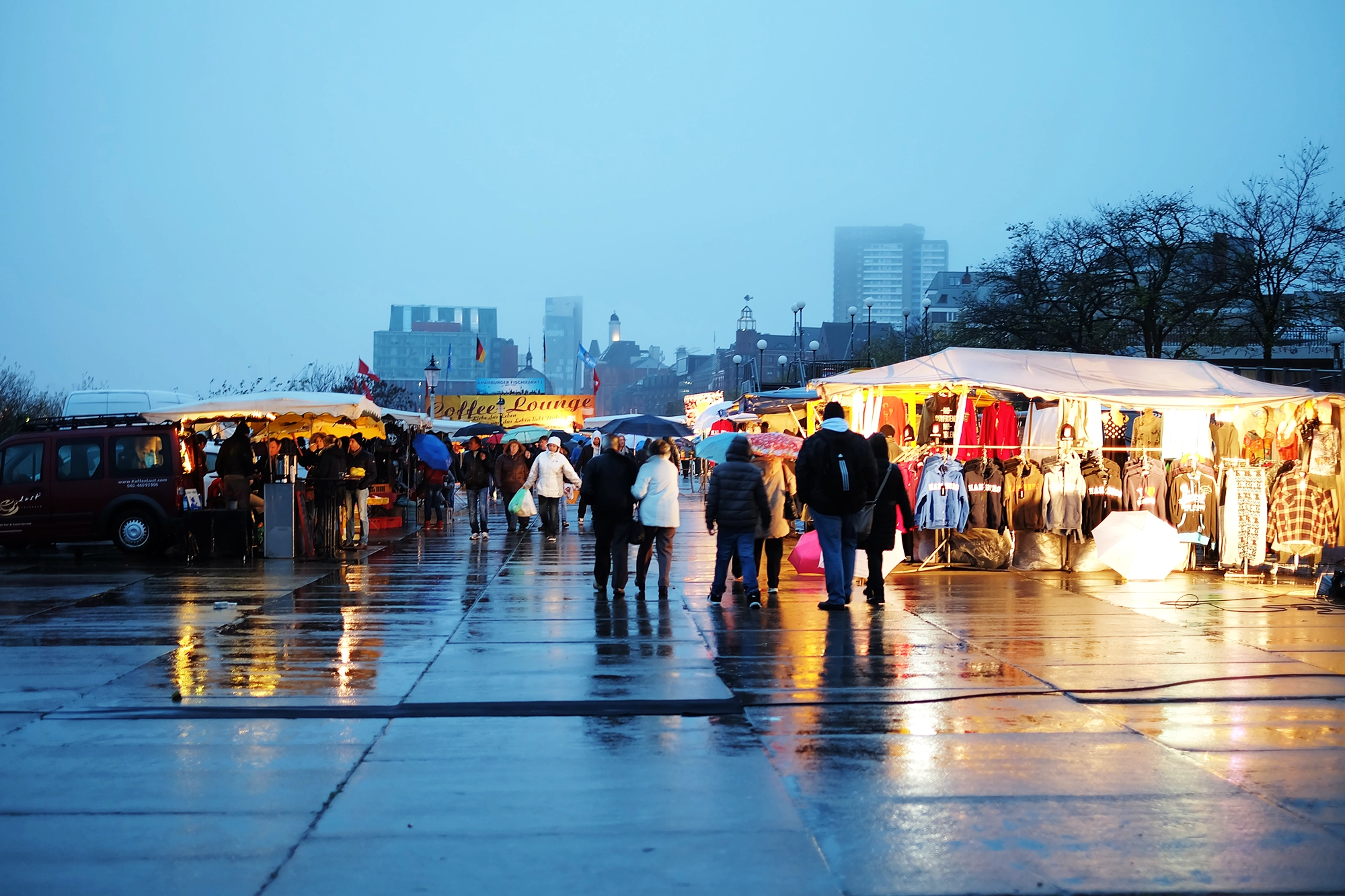
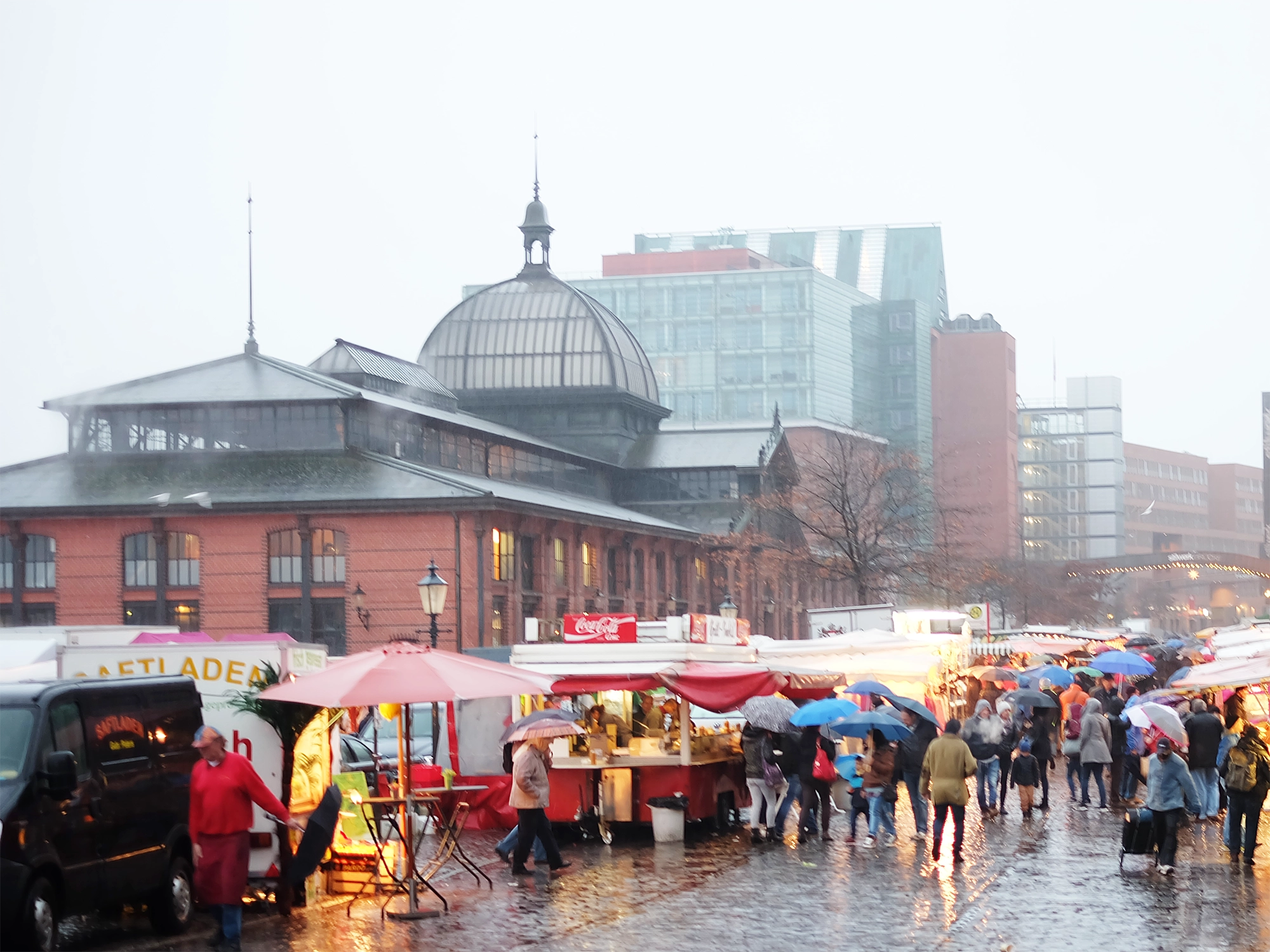
Last Sunday, I set my alarm for an hour I usually associate with long haul flights, not leisure. The plan was simple: get up early and head to Fischmarkt, Hamburg’s historic fish market. It was wet and bitterly cold, the kind of North German morning that seeps into your bones, and I had low expectations. Who voluntarily gets up at 7am on a Sunday to buy fish?
Fischmarkt has been held along the banks of the Elbe since 1703. In the beginning, local fishermen sold their nightly catch straight from the quay. Over time, the market expanded to include fruit, vegetables, flowers, sweets, and baked goods. Today, it still takes place every Sunday morning. The striking red brick Fischauktionshalle, built in 1895–96, remains the architectural anchor of the area, a reminder of the market’s trading past.
I will admit that I had not done much research before going. Had I looked into it more closely, I would have known that Hamburg’s Fischmarkt today is about far more than fish.
For the first hour, I wandered around looking for the fish auctions I had imagined would be in full swing. They are no longer part of the program. Instead, I found stalls piled high with produce, bouquets wrapped in paper, candy, pastries, and an atmosphere that felt closer to a street party than a traditional fish market.
All the while, I was thinking about the Fischbrötchen I had promised my rumbling stomach as a reward for getting up so early. A Fischbrötchen is a North German classic: a crusty roll filled with marinated or fried fish, typically herring or mackerel, topped with onions and a spoonful of remoulade or another creamy sauce.
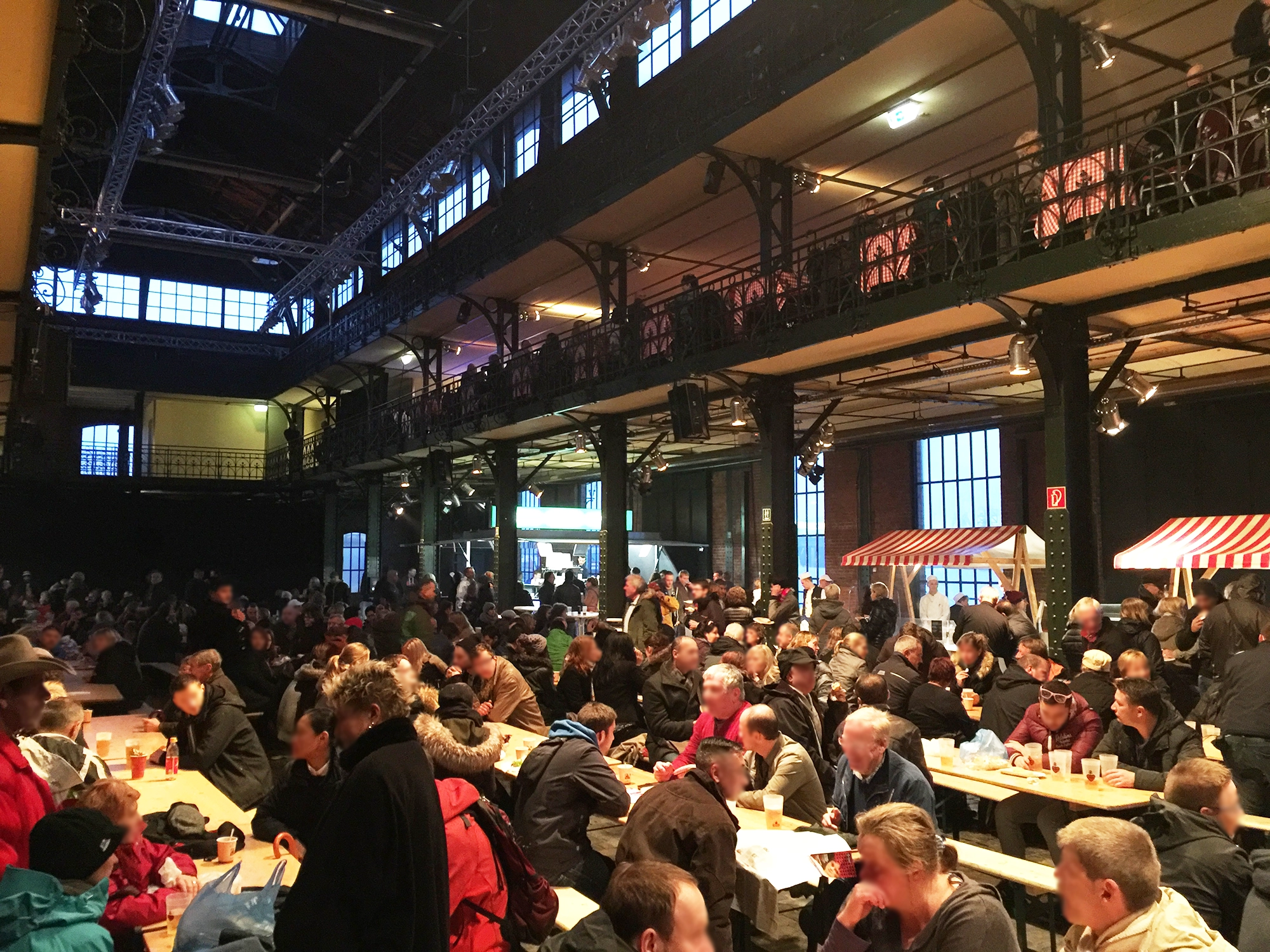
When I finally spotted the large red brick hall, my expectations rose again. It looked exactly like the kind of auction house I had been searching for. Inside, however, there were no rapid fire bids or crates of fish changing hands. Instead, long communal tables were filled with cheerful Germans drinking beer, while live music played from a stage at one end of the hall. Today, the Fischauktionshalle functions as a gathering place for music and early morning revelry rather than trade.
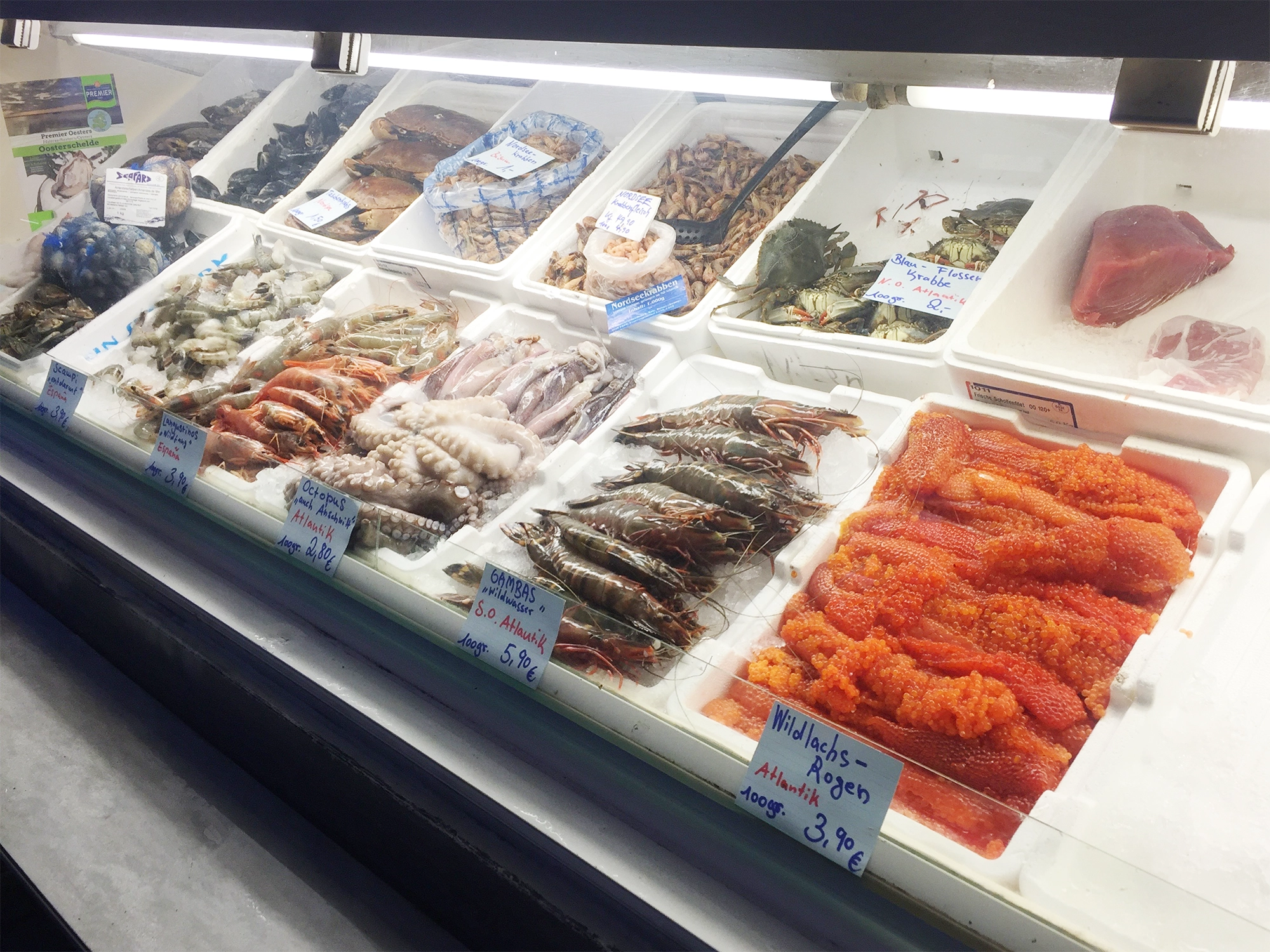
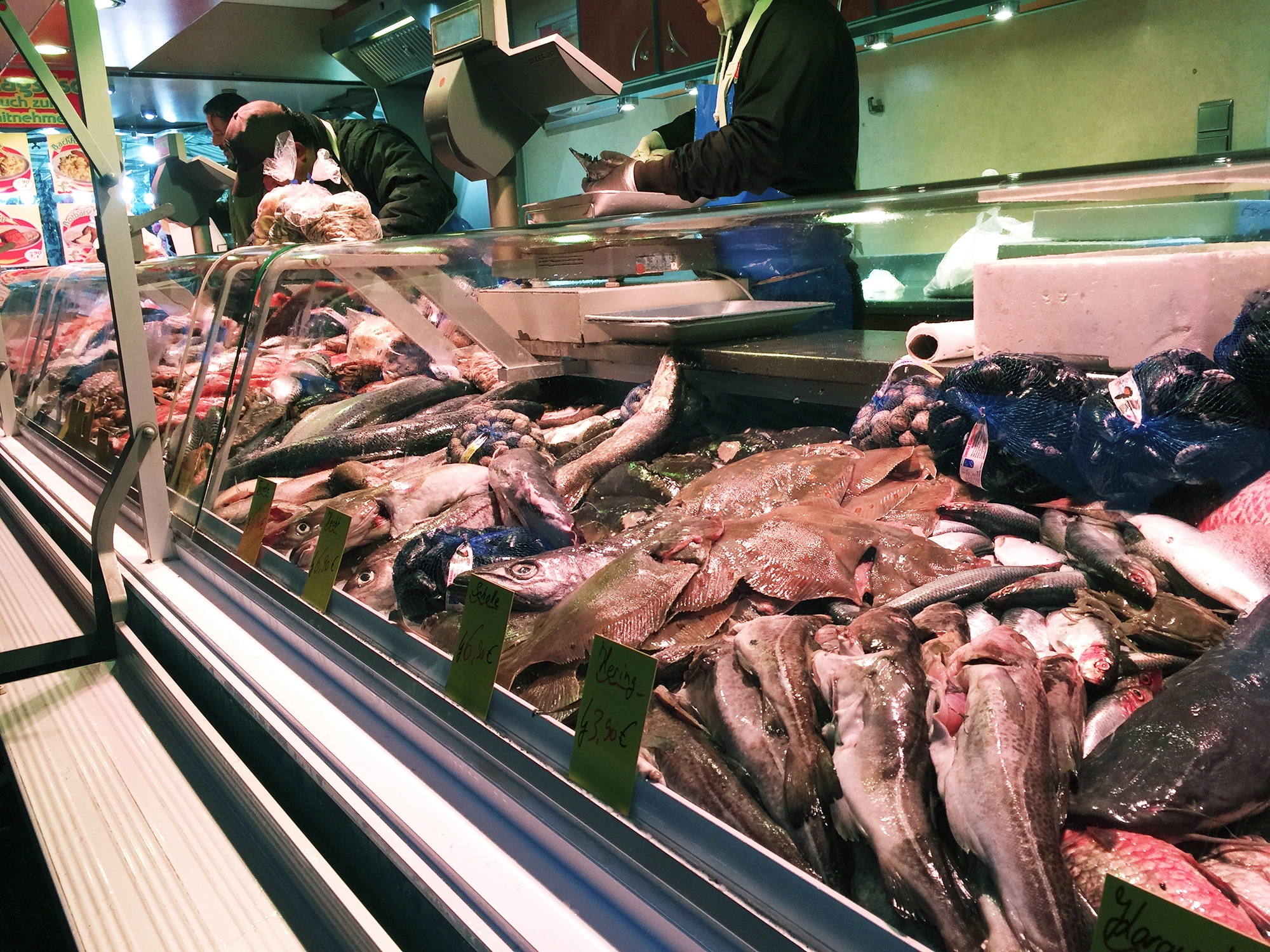
There were still a few fishmongers among the outdoor stalls, so the market is not entirely fish free. But it is clear that Fischmarkt has evolved into as much of a social event as a place to shop. Many visitors arrive straight from a long night on Reeperbahn, Hamburg’s famous entertainment and red light district.
In fact, a significant portion of the crowd that Sunday seemed to be finishing an evening that had simply slipped into morning. I would not be surprised if close to half the people there had not yet been to bed.
Despite the limited focus on fish, it was a pleasant place to spend a couple of hours. The atmosphere was relaxed and friendly, and there is something undeniably charming about being able to order a Fischbrötchen and a draft beer at 7am on a Sunday. That alone is reason enough to stop by when you are in Hamburg.
Good to Know Before You Go
Fischmarkt takes place every Sunday morning. Opening hours vary slightly by season. In winter, it typically runs from early morning until around 9:30am, and in summer until about 10am. If you want to experience the liveliest atmosphere, with music in the hall and the night crowd blending into the morning, arrive between 6 and 8am. For a calmer visit, come closer to closing time.
Dress for the weather. Down by the Elbe, it can feel much colder and windier than elsewhere in the city, even on days that seem mild.
Do not expect traditional fish auctions. Fish is still sold, but today the market is primarily a Sunday market and a social gathering point.
Bring cash. Not all stalls accept cards, and things move faster when you are in line for a Fischbrötchen.